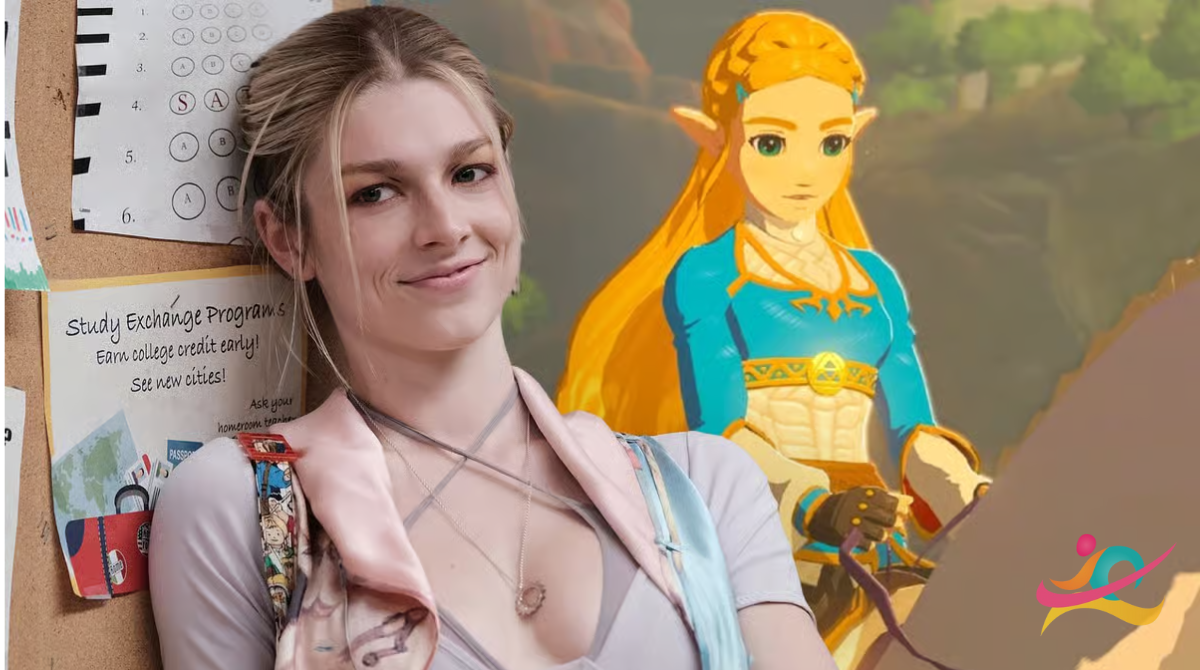
Hunter Schafer is not just an actress or fashion icon; He is a visual storyteller with the rare ability to translate emotion into imagination. Her work in fashion illustration, performance, and conceptual art reflects a deep understanding of identity, vulnerability, and change. These qualities make his artistic vision especially compelling when fans imagine how it could influence an iconic fantasy world like The Legend of Zelda. It is not about changing the tradition but about expanding it, like adding new colors to a familiar painting without erasing the original lines.
From fashion and film to the visual storytelling of Hunter Schafer
Schaefer’s background in fashion design and illustration gives her a keen eye for silhouette, texture, and emotional posture. She doesn’t just wear the characters’ clothes; She creates visual narratives around them. Every line, fold, and expression feels intentional, almost like a quiet conversation between the artwork and the viewer. This approach naturally aligns with character-driven fantasy worlds where visuals hold the same story weight as dialogue.
Why does Hunter Schafer’s artistic vision matter in pop culture?
At a time when audiences want authenticity and representation, Schaefer’s art resonates because it feels honest. She leans toward complexity rather than flattening it. Pop culture is moving toward layered storytelling, and his creative philosophy reflects that shift. That’s why her influence, even fantasy, feels relevant to an emotionally rich franchise like Zelda.
Understanding the Legend of Zelda Aesthetic
The Zelda franchise has always been visually distinctive, evolving with each generation while remaining rooted in the mythological imagination. From pixelated beginnings to graphically open worlds, its character designs reflect the cultural and technological moment in which they are born.
A Brief History of Zelda Character Design
Early Zelda characters were simple by necessity, defined by bold colors and clear shapes. As technology advanced, so did the complexity of facial expressions, clothing details, and body language. Each era brought a new interpretation honoring the spirit of heroism and destiny.
Evolution of Visual Identity Across Generations
Roots of Traditional Fantasy
The classic Zelda leaned heavily on European medieval fantasy, with royal robes, swords, and dresses. These designs were iconic but also stark, fitting neatly into established archetypes.
Modern Experimental Changes
Recent titles have introduced softer lines, natural fabrics, and more expressive faces. This change opened doors for even bolder experimentation, opening up space for influences such as contemporary fashion and conceptual art.
Hunter Schafer as a Modern Creative Force
Schafer’s art thrives in spaces that blur boundaries. She does not see identity as fixed, and this philosophy shapes the way she draws, designs, and performs.
Multidisciplinary Art and Expression
By moving fluidly between media, Schafer creates work that feels alive. His sketches often feel like they’re in the middle of a transformation, which is fitting for characters who grow throughout their journeys.
Emotional Depth as Visual Language
Emotion is central to his style. A slight tilt of the head or an elongated line can suggest longing, strength, or uncertainty. This sensitivity could add new emotional layers to the Zelda characters without altering their essence.
The Intersection of Hunter Schafer and Zelda
Fans often imagine Schaefer being connected to Zelda as both explore themes of destiny, identity, and change. It is a natural mixture of ideas rather than forced collaboration.
Why Fans Imagine Schaffer in the Zelda Universe
Her otherworldly presence and artistic sensibility feel like they belong in Hyrule. It’s like watching a modern poem echo an ancient myth; The notes match even when the language is changed.
Shared themes of identity and change
Zelda’s characters constantly evolve, both literally and metaphorically. Schaefer’s work often focuses on becoming, which makes her vision a perfect fit for this narrative rhythm.
Reimagining Princess Zelda Through Hunter Schafer’s Lens
Princess Zelda has grown from a young woman to a scholar, leader, and warrior. Schaefer’s influence could drive that growth even further.
Fluidity, strength, and vulnerability
Instead of harsh royal imagery, Zelda could be portrayed with soft strength, combining intelligence with emotional openness. This balance makes the characters feel human even in fictional settings.
Fashion-inspired character silhouette
Flowing fabrics, asymmetric designs, and subtle armor elements can reflect both royalty and flexibility. Clothes become storytellers rather than decorations.
Facial expressions and emotional nuances
Schaeffer’s emphasis on expressive faces may give Zelda quieter, more powerful moments that speak without words.
Redefining Link with Contemporary Sensibilities
Link has always been a silent protagonist, a blank canvas for players. Hunter Schafer’s artistic approach could enrich this silence.
Androgyny as a narrative tool
An androgynous link does not mean changing identity, but expanding identification capacity. Allows more players to see themselves on the hero’s journey.
Breaking Gender Norms in Hero Design
Strength doesn’t have to look bulky or aggressive. Hunter Schafer’s vision encompasses elegance and agility, redefining what heroism can look like.
Visual narrative and emotional atmosphere
Zelda games rely heavily on atmosphere, and Hunter Schafer’s style enhances the mood through subtlety.
Color and Mood Theory
Soft palettes, soft contrasts, and intentional color accents can deepen emotional scenes, making the world feel more intimate.
Minimalism meets mythology
Less visual noise allows symbolism to shine. A single accessory or brand can carry deep narrative meaning.
Influence of fashion and conceptual art
Fashion is not superficial in Hunter Schafer’s work; it is structural.
Clue meets Hyrule
High fashion concepts could inspire ceremonial attire, armor designs, and even enemy aesthetics.
Costuming as Character Development
The costumes evolve as the characters grow, visually marking their internal journeys.
Inclusion and Representation in Game Design
Fantasy worlds feel richer when they reflect diverse experiences.
Why representation matters in fantasy worlds
Players connect more deeply when they feel seen. Inclusive design does not dilute the fantasy; it strengthens you.
Hunter Schafer’s impact on inclusive character design
Her work advocates diversity without tokenism, focusing on authenticity and respect.
The future of Nintendo character aesthetics
Nintendo has shown a desire to evolve, and artistic risk is part of that future.
Shifting toward artistic boldness
Experimentation keeps long-standing franchises alive and relevant.
Embracing creative risk
Risk could lead to iconic reinvention, the kind fans remember for decades.
Fan culture and digital art movements
Online communities amplify creative ideas at lightning speed.
Fan Art inspired by Hunter Schafer’s style
Digital artists are already mixing their aesthetics with Zelda characters, demonstrating strong public interest.
Social media as a creative catalyst
Platforms turn imagination into movement, influencing key conversations about design.
Challenges of reinventing iconic characters
Change must be handled with care.
Balancing Tradition and Innovation
Respecting legacy while evolving design is a delicate dance.
Respecting legacy while evolving
The objective is growth, not replacement.
What does this mean for the gaming industry
Cross-industry inspiration is shaping the future of gaming.
Artistic collaboration between industries
Fashion, cinema, and visual arts are increasingly influencing game design.
Games as high art
Narrative-based games are now cultural touchstones, not just entertainment.
Why Hunter Schafer’s Vision Feels Timely
The world is rethinking identity, expression, and storytelling.
Cultural shift toward fluid identity
Sports reflect society, and society is evolving.
Storytelling for a new generation
Young audiences want depth, nuance, and authenticity.
Conclusion
Hunter Schafer’s artistic vision represents a future where Zelda characters evolve with emotional richness, inclusivity, and visual poetry. While entirely speculative, this idea highlights a broader shift in the way game worlds are imagined. It’s not about changing Zelda, but about exploring what it can become when timeless mythology meets modern artistic courage.